View our locations
 Make a payment
 Apply for financing


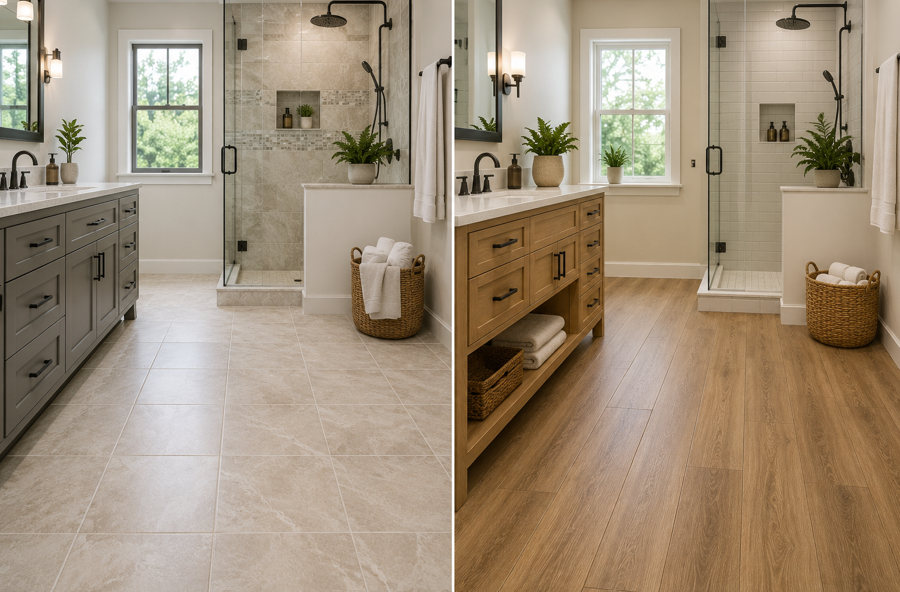
Choosing the Right Flooring for a Moisture-Prone Space
Bathroom renovations often begin with a simple goal: create a space that looks beautiful and functions well for years to come. While fixtures, vanities, and lighting usually receive a lot of attention, flooring plays an equally important role in the success of the project.
Unlike many other rooms in the home, bathrooms face constant exposure to moisture, humidity, spills, and daily foot traffic. That means flooring materials need to do more than simply look attractive. They need to handle challenging conditions while maintaining their appearance and performance over time.
For many Glen Allen homeowners, the decision often comes down to two popular options: tile and laminate. Both offer appealing designs, practical benefits, and a wide range of styles. However, they perform differently when installed in bathrooms.
At Richmond Decorating Center, homeowners frequently ask which option delivers better long-term results. The answer depends on factors such as moisture exposure, budget, comfort preferences, and how the bathroom is used.
Understanding the strengths and limitations of both flooring types can help you make a more informed renovation decision and select a solution that aligns with your family's needs.
Why Tile Has Been a Bathroom Favorite for Decades
Tile remains one of the most common flooring materials used in residential bathrooms, and for good reason. It offers exceptional durability, strong moisture resistance, and nearly unlimited design possibilities.
Modern tile products have evolved significantly, giving homeowners access to styles that work with virtually any design preference.
Porcelain Tile
Porcelain is often considered one of the most durable tile options available.
Because it is manufactured at high temperatures, porcelain becomes extremely dense and resistant to moisture. This makes it particularly well suited for bathrooms, where water exposure is common.
Many homeowners appreciate porcelain's ability to mimic natural materials such as wood, stone, and concrete while maintaining outstanding performance.
Ceramic Tile
Ceramic tile remains a popular bathroom flooring choice due to its versatility and affordability.
Available in countless colors, patterns, and finishes, ceramic tile allows homeowners to create customized bathroom designs that suit both traditional and contemporary spaces.
Natural Stone Tile
Natural stone offers a distinctive appearance that many homeowners find appealing.
Materials such as marble, slate, and travertine can add character and elegance to a bathroom, although they often require additional maintenance compared to porcelain or ceramic products.
Key Benefits of Tile Flooring
Homeowners often choose tile because it offers:
Excellent moisture resistance
Long-term durability
Wide design flexibility
Strong resale appeal
Easy routine cleaning
Compatibility with radiant heating systems
How Laminate Flooring Has Evolved
Laminate flooring has changed dramatically over the past decade. While older laminate products were often viewed as unsuitable for moisture-prone areas, today's options offer improved performance and greater design realism.
As technology has advanced, laminate has become a consideration for homeowners looking for a wood-inspired appearance without the cost associated with hardwood flooring.
Modern Laminate Construction
Laminate flooring typically consists of multiple layers that work together to create durability and visual appeal.
The top wear layer helps protect against scratches and everyday wear, while the decorative layer provides realistic wood, stone, or tile visuals.
Water-Resistant Innovations
Many manufacturers now offer water-resistant or waterproof laminate collections designed to better handle moisture exposure.
These products provide improved protection compared to traditional laminate options, although they still perform differently than tile when exposed to standing water.
Attractive Design Options
One reason laminate remains popular is its ability to replicate the appearance of natural wood.
Homeowners can achieve the warm, inviting look of hardwood while often benefiting from lower material costs and easier installation.
Budget-Friendly Appeal
For some renovation projects, laminate can provide an attractive balance between appearance and affordability.
Its lower upfront costs often make it appealing to homeowners seeking a cost-conscious flooring solution.
Moisture Resistance: Which Flooring Handles Water Better?
Bathrooms expose flooring to unique challenges. Water splashes from sinks, steam from hot showers, wet towels, and occasional spills all contribute to a demanding environment.
When comparing tile and laminate, moisture resistance becomes one of the most important considerations.
How Tile Performs Around Water
Tile is widely regarded as one of the best flooring materials for wet environments.
Porcelain and ceramic tile surfaces are highly resistant to moisture, making them well suited for bathrooms that experience regular water exposure.
With proper installation and maintenance, tile can continue performing well for decades.
How Laminate Handles Moisture
Modern laminate flooring has improved significantly, particularly with the introduction of water-resistant technologies.
However, prolonged exposure to standing water can still present challenges.
If moisture reaches vulnerable areas such as seams or subflooring, it may affect long-term performance.
Humidity and Steam Considerations
Bathrooms experience frequent fluctuations in humidity levels.
Tile tends to perform exceptionally well under these conditions because it is inherently resistant to moisture.
Laminate products can handle everyday humidity but generally benefit from careful installation and proper ventilation.
Which Flooring Handles Bathroom Moisture Better?
For moisture management, tile generally offers the advantage because:
It resists direct water exposure exceptionally well.
Steam and humidity have minimal impact.
Long-term moisture performance is excellent.
It is commonly used in showers and wet areas.
Laminate may work in certain bathrooms when:
Moisture exposure is relatively limited.
Proper installation is followed.
Water is cleaned promptly.
Adequate ventilation is maintained.
Comparing Durability and Long-Term Performance
Durability is another important factor when evaluating bathroom flooring.
Homeowners want flooring that can withstand years of daily use without requiring frequent replacement.
Tile Durability
Tile is known for its exceptional longevity.
Many properly installed tile floors continue performing well for decades while maintaining their appearance.
Tile also offers strong resistance to scratches, dents, and everyday wear.
Laminate Durability
Modern laminate flooring is designed to handle normal household activity effectively.
Its protective wear layer helps resist scratches and surface damage, making it a practical option for many households.
Long-Term Ownership Considerations
While both materials can provide years of service, tile generally offers a longer lifespan in bathroom environments.
For homeowners focused on maximum longevity, tile often becomes the preferred option.
Comfort Underfoot: Which Feels Better?
Performance is important, but comfort also plays a role in flooring decisions.
Many homeowners think about how flooring will feel during daily routines.
The Feel of Tile
Tile provides a solid, stable surface that many homeowners appreciate.
However, it can feel cooler underfoot, especially during colder months.
Some homeowners address this by installing radiant heating systems beneath the tile.
The Feel of Laminate
Laminate often feels warmer than tile because of its construction and installation methods.
Many homeowners find it more comfortable for barefoot use, particularly during cooler mornings.
Temperature Differences
Virginia experiences seasonal temperature changes, which can influence flooring comfort.
Tile tends to retain cooler temperatures, while laminate often feels slightly warmer.
Family Lifestyle Factors
Households prioritizing comfort may appreciate laminate's softer feel.
Families prioritizing moisture resistance and longevity may place greater value on tile's performance advantages.
Design Flexibility and Visual Appeal
Both flooring types offer impressive design opportunities.
The best choice often depends on the overall aesthetic homeowners hope to achieve.
Tile Design Possibilities
Tile offers tremendous versatility.
Popular bathroom styles include:
Large-format porcelain tile
Wood-look tile
Marble-inspired designs
Textured stone visuals
Contemporary geometric patterns
Laminate Design Possibilities
Laminate excels at replicating hardwood flooring.
Many products feature realistic textures and visual details that closely resemble natural wood.
Matching Different Bathroom Styles
Both flooring options can complement:
Modern bathrooms
Farmhouse-inspired spaces
Transitional interiors
Contemporary renovations
Traditional designs
The key is selecting a product that supports the overall design vision.
Maintenance and Cleaning Requirements
Most homeowners prefer flooring that is easy to maintain.
Understanding cleaning requirements can help prevent surprises after installation.
Maintaining Tile Floors
Tile is generally easy to clean using routine sweeping and mopping.
Grout lines may require occasional attention, particularly in high-use bathrooms.
Maintaining Laminate Floors
Laminate flooring benefits from regular cleaning using manufacturer-recommended methods.
Excessive moisture should generally be avoided during cleaning.
Which Flooring Is Easier to Maintain?
For many homeowners:
Tile handles moisture better during cleaning.
Laminate offers simple day-to-day maintenance.
Tile may require occasional grout maintenance.
Both benefit from routine care and prompt spill cleanup.
What Is the Easiest Bathroom Flooring to Maintain?
Many homeowners find tile easier for long-term bathroom maintenance because:
Water exposure is less concerning.
Cleaning routines are straightforward.
Durability helps preserve appearance.
Moisture-related issues are less likely.
Understanding Renovation Costs
Budget often influences flooring decisions.
While material costs matter, it's important to evaluate total project value rather than focusing solely on upfront expenses.
Material Costs
Laminate flooring is often less expensive initially than many tile products.
This can make it appealing for homeowners working within tighter renovation budgets.
Installation Costs
Installation complexity can vary significantly.
Tile installation typically requires more labor and preparation, which can increase project costs.
Laminate installation is often faster and less labor-intensive.
Long-Term Value
When evaluating value, homeowners should consider:
Product lifespan
Maintenance requirements
Replacement frequency
Overall performance
Many homeowners exploring tile flooring options find that the higher upfront investment may provide strong long-term value due to durability and moisture resistance.
Replacement Considerations
A lower initial cost doesn't always result in lower lifetime ownership costs.
Long-lasting flooring can often provide better overall value over time.
Which Flooring Works Best for Different Bathroom Types?
Not every bathroom experiences the same level of use.
The best flooring choice often depends on the specific room.
Primary Bathrooms
Tile is often preferred due to frequent use, moisture exposure, and long-term durability.
Children's Bathrooms
Tile performs well because it can handle splashes, spills, and heavy daily use.
Guest Bathrooms
Both tile and laminate may work well depending on usage levels.
Powder Rooms
Lower moisture exposure can make laminate a more practical option for some homeowners.
High-Traffic Family Bathrooms
Tile typically provides stronger long-term performance in demanding environments.
Should You Choose Tile or Laminate?
Consider tile if you prioritize:
Maximum moisture resistance
Long lifespan
Durability
Premium bathroom performance
Consider laminate if you prioritize:
Lower upfront costs
Warmer feel underfoot
Wood-inspired aesthetics
Bathrooms with limited moisture exposure
Why Professional Guidance Matters Before Making a Decision
Bathroom flooring involves more than choosing a style you like.
Factors such as moisture levels, household habits, ventilation, budget, and long-term goals all influence which product will perform best.
Professional flooring specialists can help evaluate these factors and recommend solutions tailored to your home.
They can also explain product differences, installation considerations, and maintenance expectations.
Making the right flooring choice at the beginning of a renovation often helps homeowners avoid costly changes later.
If you're comparing flooring options for your bathroom renovation, get in touch to discuss products, performance considerations, and professional installation solutions.
Finding the Right Balance Between Performance and Style
Both tile and laminate offer advantages for homeowners planning a bathroom renovation.
Tile continues to set the standard for moisture resistance, durability, and long-term bathroom performance. Laminate offers attractive visuals, comfort, and affordability that may suit certain spaces and budgets.
The best choice ultimately depends on how the bathroom is used, the level of moisture exposure, and the priorities of the homeowner.
For many Glen Allen families, investing in flooring that aligns with both daily needs and long-term goals leads to greater satisfaction over time. By focusing on performance, comfort, maintenance requirements, and value, homeowners can select a flooring solution that supports a beautiful and functional bathroom for years to come.