View our locations
  Make a payment
  Apply for financing

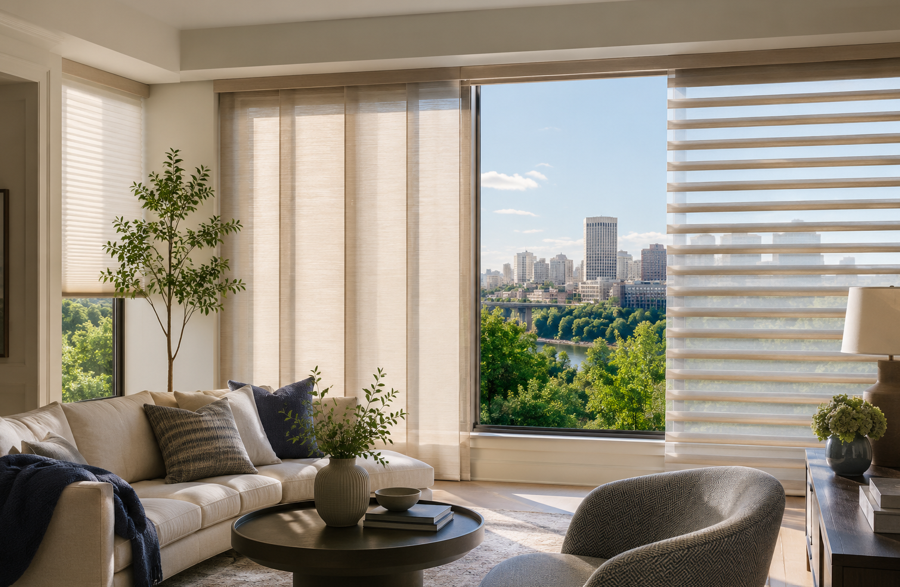
Create a More Private, Comfortable Home This Summer
Summer in Richmond brings long days, strong afternoon sun, and more time spent at home. Open windows and abundant natural light can make a room feel welcoming, but they can also leave living rooms, bedrooms, kitchens, and home offices feeling exposed.
The right window covering helps homeowners manage that balance. It can provide privacy when needed, soften glare, reduce direct sunlight, and still allow a room to feel open. The best option depends on the window, the direction it faces, the time of day privacy matters most, and how much natural light the household wants to preserve.
At Richmond Decorating, homeowners can compare window treatments with support from a local business that has served Central Virginia since 1977. The company offers Hunter Douglas products, personal design guidance, in-home service, and professional installation for Richmond-area homes.
For many summer privacy needs, useful options include cellular shades, Roman shades, roller and solar shades, blinds, shutters, privacy sheers, and vertical panels. Some preserve filtered daylight while limiting views from outside. Others provide stronger evening or room-darkening coverage. Layered treatments can offer both.
This guide explains how privacy changes throughout the day, which Hunter Douglas styles suit different rooms, and how to select coverings without giving up light, comfort, or design.
Understand the Kind of Privacy Each Room Needs
Privacy is not the same in every part of the home. A street-facing living room may need daytime screening without losing natural light. A bedroom may need stronger evening coverage. A bathroom may call for dependable privacy throughout the day, while a home office may need glare control for video calls.
Daytime Privacy
During daylight hours, the inside of a home is often darker than the outdoors. Some sheer or light-filtering products can reduce the view into a room while still allowing filtered light to enter.
This works well in living rooms, dining rooms, kitchens, and other shared spaces where homeowners want brightness without feeling fully visible from the street or neighboring properties.
Daytime privacy is not always nighttime privacy. Once interior lights are on after dark, silhouettes and room details may become easier to see through sheer materials.
Evening and Nighttime Privacy
Bedrooms, bathrooms, and street-facing rooms often need more complete coverage after sunset. Opaque shades, closed blinds, shutters, or room-darkening fabrics can provide stronger visual separation.
Fit matters too. Small gaps at the sides of a shade may be acceptable in a living room but more noticeable in a bedroom. Professional measurement can help homeowners understand how each option will sit within or around the window.
Privacy From Specific Angles
Side windows, elevated neighboring homes, patios, and walkways can create angled views even when a home does not face the street directly.
Top-down operation, adjustable louvers, tilting vanes, and layered fabrics make it possible to block one sightline while leaving another part of the window open.
The goal is not to block every ray of light. It is to control what people can see, when they can see it, and how the room feels throughout the day.
Match the Window Treatment to the Room
The most practical solution begins with the room’s function. A treatment that works beautifully in a family room may not provide the coverage expected in a bedroom.
Living Rooms and Family Rooms
Shared spaces often need flexible privacy. Homeowners may want natural light during the day, less glare in the afternoon, and fuller coverage at night.
Privacy sheers, Roman shades, roller shades, blinds, and shutters can all work. Layering side panels over a shade can add softness and another level of evening coverage.
For street-facing windows, look for a treatment that allows light control without requiring the room to remain fully closed all day.
Bedrooms
Bedrooms usually need stronger privacy and better light control. Opaque roller shades, room-darkening Roman shades, shutters, or cellular shades with suitable fabrics can create a more restful setting.
Room-darkening fabrics can reduce incoming light, although small gaps around the treatment may still let some light through. Mounting style and layering can make a noticeable difference.
Bathrooms and Kitchens
Bathroom privacy needs to be dependable, and the material needs to suit the room’s moisture level and ventilation. Shutters, blinds, and selected shades may work well when the product is appropriate for the setting.
Kitchen coverings need to balance privacy, light, and practical care. Roller shades, blinds, shutters, or Roman shades placed away from cooking splatter can all be considered. A window over the sink may benefit from a treatment that can be raised fully and cleaned according to the manufacturer’s guidance.
Home Offices
Home offices need privacy for meetings, reduced screen glare, and enough daylight to keep the space comfortable.
Solar shades can reduce glare while preserving an outward daytime view, but they may not provide complete nighttime privacy. A second layer can strengthen coverage after dark.
Sliding Doors and Wide Windows
Large glass doors and expansive windows create some of the biggest privacy challenges. Vertical treatments and gliding panels can cover broad openings while remaining easy to move.
Hunter Douglas Skyline® Gliding Window Panels are designed for expansive windows and sliding glass doors and can also serve as room dividers in large spaces.
Hunter Douglas Options for Flexible Summer Privacy
Hunter Douglas offers several product categories that can help homeowners adjust privacy, light, and style. The right choice depends on the room, window shape, outside view, and desired level of coverage.
Luminette® Privacy Sheers
Luminette® Privacy Sheers combine soft fabric with vertical vanes. They are often considered for wide windows and sliding doors where homeowners want a flowing appearance with adjustable privacy.
The vanes can be positioned to manage outside views and incoming light. When closed, they provide more coverage. When opened or tilted, they allow more daylight and access to the view.
They can work especially well in living rooms, dining rooms, and spaces that open onto a patio.
Duette® Honeycomb Shades
Duette® Honeycomb Shades use a cellular construction that traps air within the shade, creating a layer of insulation between the room and the window.
Light-filtering fabrics can brighten shared rooms, while more opaque choices may suit bedrooms and private spaces. Some configurations can cover the lower portion of the window while leaving the top open, which is useful for street-facing rooms that need privacy at eye level.
Vignette® Modern Roman Shades
Vignette® Modern Roman Shades provide the soft appearance of fabric with clean folds and a streamlined profile. They are available in different colors, textures, and styles.
Roman shades can suit bedrooms, dining rooms, living rooms, and offices. The fabric determines how much light passes through and how much privacy the shade provides.
For stronger nighttime coverage, homeowners can choose a more opaque material or pair the shade with side panels.
Designer Roller Shades and Solar Screen Shades
Roller shades provide clean coverage with a simple profile. Fabrics range from translucent to room-darkening, allowing homeowners to match the treatment to the room.
Solar shades help reduce glare and manage sunlight while preserving some outward visibility. They can be especially useful in bright home offices and west-facing living spaces.
A solar fabric that supports daytime privacy may allow greater visibility into the home at night when interior lights are on. Side panels or a second treatment can provide fuller evening coverage.
Provenance® Woven Wood Shades
Provenance® Woven Wood Shades use natural materials and textures to create a warm, organic look. Their woven construction gives each treatment distinctive character.
Because weave openness varies, homeowners need to consider how much privacy the material provides. A liner may strengthen coverage and light control.
Shutters and Blinds
NewStyle® Hybrid Shutters and Heritance® Hardwood Shutters use adjustable louvers to direct light and limit views. Closing the louvers creates stronger privacy, while opening them allows more light and visibility.
Parkland® Wood Blinds, EverWood® Faux Wood Blinds, and Modern Precious Metals® blinds offer similar control through adjustable slats. Wood can bring warmth to bedrooms and offices, while faux wood and metal may suit rooms where easy cleaning is a priority.
Homeowners can explore a range of Hunter Douglas window coverings to compare fabrics, vanes, louvers, operating systems, and privacy levels for each room.
Combine Privacy, Daylight, and Summer Comfort
One treatment may meet every need, but layering gives homeowners greater flexibility throughout a Richmond summer.
Pair Sheers With Opaque Coverage
A sheer layer can soften daylight and support daytime privacy. An opaque shade or drapery panel can provide stronger evening coverage.
This combination works well in bedrooms and formal living spaces where the window serves different purposes throughout the day.
Use Solar Shades With a Second Layer
Solar shades are useful for glare and daytime visibility, but they may not create the nighttime privacy a street-facing room needs.
Pairing them with drapery, side panels, or another opaque treatment creates a more complete day-to-night solution.
Pay Attention to Window Direction
West-facing windows often receive strong afternoon sun. South-facing rooms may stay bright for much of the day, while east-facing windows can bring intense morning light.
The direction helps determine whether a room needs glare reduction, filtered light, stronger coverage, or a combination.
Protect Furnishings From Direct Sunlight
Sunlight can affect flooring, furniture, artwork, and textiles over time. Adjustable vanes, louvers, and shades let homeowners reduce direct exposure as the sun moves without keeping the room closed all day.
Cellular shades may also add an insulating layer at the window. Actual performance varies by product, fit, window, and household conditions, so product-specific information should guide the final choice.
Add Convenient Privacy With PowerView® Automation
Privacy needs often change on a predictable schedule. A bedroom may need coverage at sunset. A living room may need its shades lowered during the brightest part of the afternoon. A home office may need glare control before a regular video meeting.
Hunter Douglas PowerView® Automation allows compatible window treatments to be adjusted at the touch of a button or on a programmed schedule, whether the homeowner is at home or away.
Schedule Evening Coverage
Programmed operation can close selected treatments around the time evening visibility becomes a concern. Schedules may need seasonal adjustment as daylight hours change.
Control Hard-to-Reach Windows
Automation can be useful for tall, wide, or awkwardly positioned windows. Homeowners can adjust privacy without reaching over furniture or handling cords.
Create Different Settings by Room
Bedrooms can close earlier, while living-room shades may remain open until later. A room-based plan supports comfort without treating every window the same way.
Adjust Several Treatments Together
Automation can also simplify rooms with multiple windows. Instead of moving from shade to shade, homeowners can adjust a group based on the time of day or activity.
Compatibility, controls, power options, and installation requirements vary by product. These details should be reviewed during selection.
Choose a Style and Fit That Work Year-Round
Privacy performance comes first, but the treatment also needs to complement the room beyond summer.
Select Colors and Textures Thoughtfully
White, cream, sand, and pale gray can make rooms feel open and airy. Woven materials, linen-inspired fabrics, and wood tones add warmth. Navy, charcoal, forest green, and rich brown create a stronger frame around the window.
Patterns can add interest in a room with mostly solid furnishings. Where wallpaper, rugs, or upholstery already carry pattern, a quieter treatment may create better balance.
View samples in daylight and under evening lighting. Fabric color, texture, and transparency can change significantly when installed against a bright window.
Compare Inside and Outside Mounting
Inside-mounted treatments sit within the window frame and create a clean, integrated appearance. Outside-mounted treatments cover more of the surrounding area and may reduce visible gaps.
The frame depth, trim, handles, and window shape influence which option works best.
Consider Light Gaps and Clearance
Most window treatments allow some light around the edges. For bedrooms and media rooms, homeowners can discuss whether layering or outside mounting may better support the desired coverage.
The treatment also needs room to operate without catching on furniture, faucets, handles, or door hardware.
Use Professional Measurement and Installation
Accurate measurement helps the treatment fit the window and move as intended. Professional installation supports level mounting, secure hardware, and a polished finished appearance.
Richmond Decorating provides personal attention, in-home visits, and professional installation for window treatments and other interior design solutions.
Enjoy Privacy Without Giving Up Natural Light
The best summer window covering gives homeowners control instead of forcing a permanent choice between privacy and brightness.
Start by identifying when the room feels exposed, where the view comes from, and how much natural light the space needs. Then compare products based on fabric opacity, vane or louver adjustment, mounting style, room function, and ease of operation.
Privacy sheers and solar shades can support daytime comfort. Roman shades, roller shades, cellular shades, blinds, and shutters can provide stronger coverage. Layered treatments can move from filtered daylight to fuller evening privacy, while automation can make daily adjustments more convenient.
Richmond homeowners do not need to use the same treatment in every room. A solar shade may suit the office, shutters may fit the bathroom, and a layered Roman shade may work better in the bedroom. Coordinating colors and textures can keep the home visually connected even when the products differ.
Ready to make your home feel more private and comfortable this summer? Get in touch for personalized guidance on Hunter Douglas options, professional measurement, and installation.