View our locations
 Make a payment
 Apply for financing


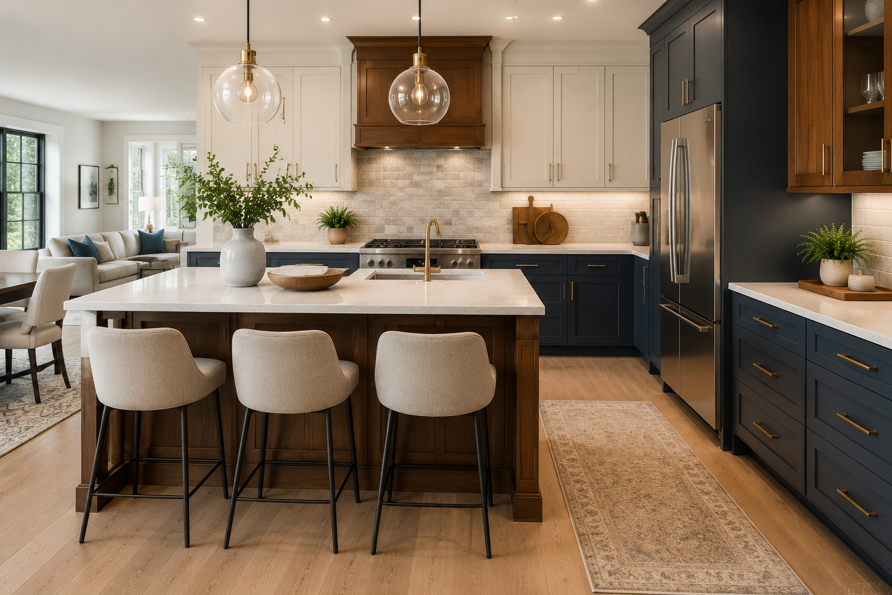
Why Mixed Cabinet Finishes Continue Growing in Popularity
Kitchen design trends have shifted noticeably over the past several years. Instead of perfectly matching cabinetry throughout the entire kitchen, many homeowners are now embracing a more layered and personalized approach. Mixed cabinet finishes have become especially popular because they create visual depth, character, and custom design appeal without making the space feel overly formal.
For homeowners in Glen Allen, VA, this trend fits especially well with the way modern families use their kitchens today. Kitchens are no longer just cooking spaces. They’ve become gathering areas, entertaining hubs, homework stations, coffee corners, and multifunctional living environments.
Mixing cabinet finishes allows homeowners to create kitchens that feel more unique and visually balanced while still maintaining warmth and functionality.
At Richmond Decorating Center, homeowners throughout Central Virginia have trusted experienced design professionals since 1977 for guidance on creating kitchens that feel timeless, practical, and personalized. As a long-established local company, the team understands how to help homeowners blend current trends with long-term design value.
The key to successful mixed-finish cabinetry is balance. When done thoughtfully, combining finishes can make a kitchen feel elevated and custom-designed. When overdone, however, the space can quickly feel busy or visually overwhelming.
Understanding how to mix finishes intentionally can help homeowners create kitchens that feel stylish, cohesive, and comfortable for everyday living.
Why Homeowners Are Moving Away From Fully Matching Kitchens
For many years, matching cabinetry throughout the kitchen was considered the standard approach. While uniform kitchens can still look beautiful, many homeowners today want spaces that feel more relaxed and visually dynamic.
Mixed cabinet finishes help break up large expanses of cabinetry while adding personality and contrast to the room.
This approach can help kitchens feel:
more custom
more visually layered
warmer and less rigid
more connected to open living spaces
more modern without feeling trendy
In Glen Allen homes, mixed finishes often work especially well because many kitchens blend traditional Virginia architecture with updated modern interiors.
Homeowners also appreciate that mixing finishes allows them to highlight specific areas of the kitchen without completely redesigning the entire space.
What Does “Mixed Cabinet Finishes” Actually Mean?
Mixed cabinet finishes simply means using more than one cabinet color, stain, texture, or material within the same kitchen.
This can include combinations such as:
painted upper cabinets with stained lower cabinets
darker islands paired with lighter perimeter cabinetry
wood tones mixed with painted finishes
matte finishes combined with natural textures
contrasting accent cabinetry
The goal is not to create randomness. Instead, successful mixed-finish kitchens use contrast intentionally to create visual structure and balance.
When done correctly, the kitchen still feels cohesive even though multiple finishes are being used.
Why Balance Matters More Than Contrast
One of the biggest mistakes homeowners make when mixing cabinet finishes is focusing too heavily on creating dramatic contrast without thinking about overall balance.
Strong contrast alone does not automatically create good design.
A successful kitchen usually maintains:
visual flow
color harmony
consistent undertones
balanced distribution of finishes
intentional focal points
For example, pairing warm wood cabinets with cool gray painted finishes may feel disconnected if the undertones clash. Similarly, using too many competing textures can make the kitchen feel chaotic instead of sophisticated.
The goal is to create enough variation to feel interesting while still allowing the room to feel calm and cohesive.
One of the Simplest Approaches: Different Island Finishes
One of the easiest and most popular ways to mix cabinet finishes is by giving the kitchen island a different look from the perimeter cabinets.
This creates a natural focal point without overwhelming the space.
For example:
white perimeter cabinets with a deep navy island
warm wood cabinetry with a charcoal island
soft greige cabinets paired with a walnut island
This strategy works especially well in Glen Allen homes with open-concept layouts because the island naturally becomes a visual anchor within the room.
It also allows homeowners to introduce darker or bolder tones without making the kitchen feel too heavy overall.
Mixing Painted Cabinets with Natural Wood Tones
Another popular design approach combines painted cabinetry with natural wood finishes.
This pairing often creates warmth and visual texture while still feeling timeless.
Common combinations include:
white cabinets with oak accents
soft gray cabinetry with walnut shelving
greige lowers with natural wood uppers
painted perimeter cabinets with wood islands
Natural wood helps soften kitchens and adds warmth that many homeowners appreciate, especially in family-focused spaces.
In Glen Allen kitchens, wood tones often pair beautifully with:
farmhouse-inspired interiors
transitional kitchens
modern rustic styles
warm neutral palettes
The key is choosing wood tones that feel intentional rather than overly orange or disconnected from the rest of the palette.
Why Neutral Colors Usually Work Best
While bold cabinet colors can certainly work in the right kitchen, many homeowners achieve better long-term results by keeping at least one finish relatively neutral.
Neutral finishes help:
create visual breathing room
support long-term flexibility
work with changing decor trends
maintain broader resale appeal
Popular neutral cabinet finishes include:
warm white
soft taupe
greige
muted charcoal
natural oak
soft mushroom tones
These shades pair well with many countertop materials, backsplash styles, and flooring finishes.
Neutral cabinetry also tends to age more gracefully than highly trend-driven color choices.
Upper and Lower Cabinets Do Not Always Need to Match
Many homeowners automatically assume upper and lower cabinets should be identical. However, separating these finishes can actually improve the overall visual balance of the kitchen.
A common strategy involves:
lighter upper cabinets
darker lower cabinets
This helps kitchens feel:
brighter
more open
less top-heavy
visually grounded
Lighter upper cabinets reflect more light and help maintain an airy appearance, while darker lower cabinets add depth and practicality.
This approach can work especially well in kitchens with:
lower natural light
smaller footprints
tall cabinetry walls
open shelving accents
How Countertops Help Tie Mixed Finishes Together
Countertops often act as the visual bridge between multiple cabinet finishes.
That’s why countertop selection becomes incredibly important in mixed-finish kitchens.
The right countertop can help unify:
cabinet colors
wood tones
backsplash materials
flooring finishes
hardware selections
For example, countertops with subtle warm veining may help connect stained wood cabinetry with painted perimeter cabinets.
Homeowners exploring cabinets & countertops often find that countertop material plays a major role in making mixed-finish kitchens feel cohesive rather than disconnected.
Quartz continues to remain especially popular because it offers:
visual versatility
low maintenance
consistent coloration
compatibility with multiple cabinet styles
Hardware Can Help Create Consistency
Cabinet hardware may seem like a smaller detail, but it can dramatically influence how cohesive mixed finishes feel.
Consistent hardware helps visually connect different cabinet colors and textures throughout the kitchen.
Popular hardware finishes in Glen Allen kitchens include:
matte black
brushed brass
satin nickel
warm bronze
Choosing one primary hardware finish throughout the space can help create a cleaner overall look even when cabinet finishes vary.
This becomes especially important in larger kitchens with multiple cabinetry zones.
Avoid Using Too Many Cabinet Colors
One of the easiest ways to overwhelm a kitchen is by introducing too many competing finishes at once.
In most cases, limiting the kitchen to:
one primary finish
one secondary finish
one accent material
creates the most balanced result.
Adding too many competing tones can make the kitchen feel:
cluttered
visually confusing
overly busy
difficult to style
Simplicity often creates stronger long-term design success.
Many timeless kitchens use contrast thoughtfully while still maintaining restraint.
Lighting Plays a Bigger Role Than Many Homeowners Expect
Cabinet finishes can look dramatically different depending on lighting conditions.
Natural light, under-cabinet lighting, pendant fixtures, and ceiling lights all influence how colors and wood tones appear throughout the day.
Before finalizing finishes, homeowners should evaluate samples in:
morning light
afternoon sunlight
evening lighting
artificial interior lighting
Warm lighting can intensify wood tones, while cooler lighting may make painted cabinets feel sharper or more muted.
Testing samples in the actual kitchen environment helps avoid unexpected results after installation.
Mixed Finishes Can Improve Resale Appeal When Done Thoughtfully
Many homeowners worry that mixed cabinet finishes may hurt resale value. In reality, balanced mixed-finish kitchens often feel more custom and upscale when designed carefully.
Buyers frequently appreciate kitchens that feel:
professionally designed
visually layered
updated without feeling overly trendy
warm and welcoming
The key is avoiding extreme color combinations or overly personalized choices that may feel difficult for future buyers to embrace.
Neutral palettes with subtle contrast often provide the best balance between personality and broad appeal.
Common Mistakes to Avoid When Mixing Cabinet Finishes
While mixed finishes can look beautiful, a few common mistakes can quickly make the kitchen feel overwhelming.
Mixing Warm and Cool Undertones Incorrectly
Warm woods paired with cool gray cabinetry may clash if the undertones do not complement one another.
Undertone consistency helps maintain visual harmony.
Using Too Many Statement Features
If the kitchen already includes:
bold countertops
dramatic backsplash tile
statement lighting
strong flooring patterns
adding too many cabinet finish variations can create visual overload.
Ignoring Overall Kitchen Flow
Cabinet finishes should feel connected to nearby spaces, especially in open-concept homes where kitchens flow directly into living and dining areas.
Choosing Trends Over Longevity
Highly trend-driven colors may feel exciting initially but can become visually tiring over time.
Many homeowners benefit from choosing finishes that still feel timeless several years later.
Why Professional Design Guidance Helps Simplify the Process
Mixing cabinet finishes successfully involves more than simply choosing two colors that look attractive individually.
Homeowners must consider:
lighting
undertones
layout balance
countertop coordination
flooring compatibility
hardware finishes
long-term style goals
Professional design guidance can help simplify those decisions while helping homeowners avoid costly mistakes.
Experienced designers can also help homeowners narrow down combinations that fit:
the architecture of the home
family lifestyle needs
desired aesthetic
resale priorities
This often creates a smoother renovation experience overall.
What Glen Allen Homeowners Should Remember About Mixed Cabinet Finishes
Mixed cabinet finishes continue growing in popularity because they help kitchens feel more personalized, layered, and visually interesting. When designed thoughtfully, they can create a custom look that feels warm, timeless, and highly functional for everyday living.
The most successful mixed-finish kitchens typically focus on:
balance
restraint
cohesive undertones
thoughtful contrast
long-term flexibility
Rather than trying to make every feature stand out, the goal should be creating a kitchen that feels comfortable, connected, and easy to live in.
For Glen Allen homeowners, mixed cabinet finishes can work beautifully in both traditional and modern homes when paired with the right materials, lighting, and layout planning.
If you’re planning a kitchen renovation and want help creating a balanced, timeless design, the experienced team at Richmond Decorating Center is ready to guide you through the process. Whether you’re updating cabinetry, countertops, or planning a full kitchen refresh, reach out to us for personalized design guidance tailored to your home and lifestyle.
With the right balance of finishes, homeowners can create kitchens that feel stylish today while still remaining beautiful and functional for years to come.