View our locations
 Make a payment
 Apply for financing


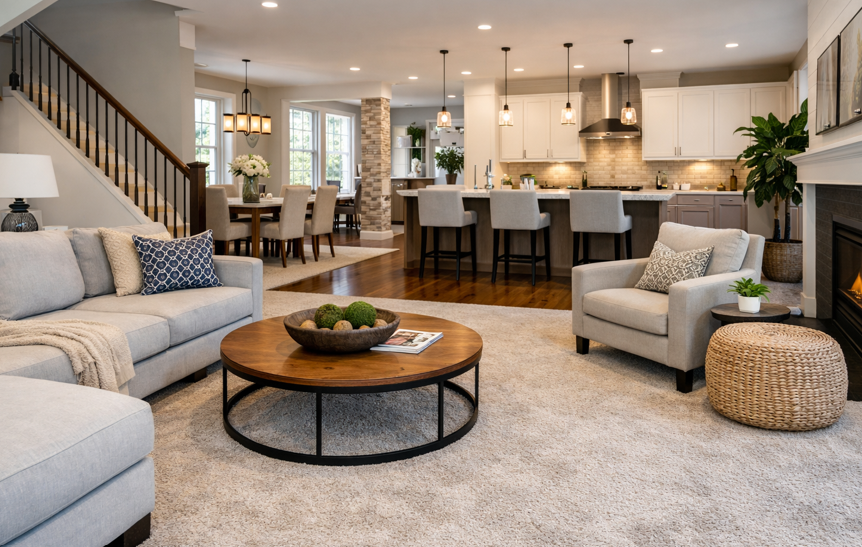
Why Open Concept Homes Need a Thoughtful Carpet Strategy
Open concept homes have become a defining feature of modern living across Richmond, VA. By removing walls and creating seamless transitions between kitchens, living rooms, and dining areas, these layouts feel more spacious, inviting, and perfect for both everyday living and entertaining. But with that openness comes a unique design challenge—how do you create structure and comfort without physical boundaries?
This is where carpet plays a powerful role. In open concept spaces, flooring isn’t just a background feature. It becomes a key design element that influences how the entire home feels and functions. The right carpet can bring warmth, reduce noise, and subtly define different zones, all while maintaining a cohesive look.
At Richmond Decorating Center, homeowners often discover that choosing carpet for an open layout requires a more thoughtful approach than traditional room-by-room flooring. It’s not just about picking a colour or texture—it’s about creating harmony across a large, connected space.
A well-chosen carpet helps soften the look of expansive interiors, making them feel more comfortable and lived-in. It also absorbs sound, which is especially valuable in homes where conversations, music, and daily activity all happen in one shared area.
This guide walks through how to choose carpet that blends style and function effortlessly—so your open concept home feels both beautifully designed and perfectly practical.
Understanding How Carpet Defines Spaces Without Walls
In an open concept home, visual zoning becomes essential. Without walls to separate spaces, you rely on design elements—like carpet—to create subtle distinctions between areas while keeping everything connected.
Carpet can act as a quiet guide, helping define where one area ends and another begins. For example, a soft, plush carpet in the living area instantly signals comfort and relaxation, while a different flooring material or a tighter carpet style in a dining space can suggest a more structured environment.
One effective approach is to use carpet to anchor furniture groupings. A well-placed carpet beneath a sofa and coffee table creates a natural “living zone” without needing walls. This technique works especially well in Richmond homes where open layouts are designed for both family time and entertaining.
Another strategy involves combining carpet with hard flooring like hardwood or tile. This allows for clear transitions between spaces such as kitchens and living rooms while maintaining visual flow. The key is to ensure these transitions feel intentional and smooth, rather than abrupt.
Even within carpeted areas, subtle differences in tone or texture can help create visual interest without breaking cohesion. Think of it as layering design elements rather than dividing them.
When done right, carpet doesn’t just cover the floor—it shapes how the space is experienced, guiding movement and enhancing the overall layout.
Choosing the Right Carpet Style for Open Concept Living
Selecting the right carpet style is one of the most important decisions for an open concept home. Because the flooring extends across a larger area, every detail—from texture to colour—has a bigger impact.
Cut Pile vs Loop Pile
Cut pile carpets are known for their soft, inviting feel, making them ideal for living areas where comfort is a priority. Loop pile options, on the other hand, offer a more structured look and tend to handle high-traffic areas well. Many homeowners choose a blend of durability and softness to balance everyday use with comfort.
Patterned Carpets
Subtle patterns can add depth and personality without overwhelming the space. In open layouts, it’s best to keep patterns understated so they enhance the design rather than compete with furniture or décor.
Neutral vs Bold Colours
Neutral tones—such as soft greys, warm beiges, and earthy hues—are popular for open concept homes because they create a consistent backdrop. However, adding a slightly richer tone in key areas can introduce visual interest while still maintaining cohesion.
Low vs Plush Textures
Plush carpets feel luxurious underfoot and are perfect for relaxation zones, while lower-profile textures tend to be easier to maintain. Choosing a texture that suits your lifestyle ensures your flooring remains both beautiful and practical over time.
Ultimately, the goal is to select a carpet that feels stylish, durable, and cohesive across the entire space, supporting both design and daily living.
How to Maintain Flow While Using Carpet in Large Spaces
One of the biggest design goals in an open concept home is maintaining flow. Without it, the space can feel disjointed or cluttered, even if each area looks good on its own.
Consistency plays a major role here. Using a unified colour palette across your carpet and surrounding materials helps create a seamless look. Even if you’re combining carpet with other flooring types, choosing complementary tones keeps everything visually connected.
Another important factor is transition. Smooth transitions between carpet and hard flooring prevent the space from feeling segmented. This can be achieved through carefully selected trims or gradual shifts in texture.
It’s also helpful to avoid introducing too many contrasting elements. While variety can add interest, too many changes in flooring can break the sense of openness that makes these layouts so appealing.
Instead, focus on creating a continuous visual story. When your carpet flows naturally from one area to the next, the entire home feels more polished and thoughtfully designed.
Balancing Durability and Comfort for Everyday Living
Open concept homes are often the busiest areas of the house. From family gatherings to daily routines, these spaces see constant activity—so your carpet needs to keep up.
Durability is key, especially in high-traffic zones. Choosing materials known for resilience helps your flooring maintain its appearance over time. Nylon and polyester are popular options because they offer a strong balance of performance and comfort.
Stain resistance is another important consideration, particularly for households with children or pets. Modern carpets are designed with advanced features that help resist spills and make cleaning more manageable.
At the same time, comfort shouldn’t be overlooked. A well-selected carpet provides a soft, welcoming surface that makes the entire space feel more inviting. This combination of strength and comfort is what makes carpet such a practical choice for open layouts.
If you’re exploring options, take a look at different styles of carpet flooring to find solutions that suit both your lifestyle and design preferences.
Smart Layout Ideas for Open Concept Carpet Design
Designing with carpet in an open concept space offers plenty of creative possibilities. The key is to use layout techniques that enhance both function and visual appeal.
Full Carpet Coverage
In some homes, wall-to-wall carpet works beautifully, creating a unified and cosy atmosphere. This approach is ideal when comfort and warmth are top priorities.
Carpet and Hard Flooring Combination
Pairing carpet with materials like hardwood or tile is a popular choice. It allows for clear zoning while keeping the overall design cohesive. For example, kitchens often feature hard flooring, while adjacent living areas benefit from the softness of carpet.
Layering with Area Rugs
Adding rugs over carpet can introduce texture and define specific areas. This technique works well for highlighting seating arrangements or adding a decorative touch.
Zoning Through Furniture Placement
Furniture plays a big role in shaping how carpeted areas are perceived. Arranging sofas, chairs, and tables thoughtfully helps reinforce the layout and creates natural boundaries.
These layout ideas make it easier to design a space that feels organised, comfortable, and visually appealing.
Common Mistakes to Avoid When Choosing Carpet for Open Spaces
Even with the best intentions, certain mistakes can affect the overall look and performance of your flooring.
One common issue is choosing patterns that are too bold. While they may look appealing on a sample, they can become overwhelming across a large, open area.
Another mistake is overlooking traffic flow. Carpets that aren’t suited for high-use areas may show wear more quickly, affecting both appearance and longevity.
Mixing too many flooring types can also disrupt the sense of continuity. Keeping transitions simple and intentional helps maintain a cohesive design.
Maintenance is another factor that’s sometimes underestimated. Selecting a carpet that aligns with your daily routine ensures it remains easy to care for over time.
By avoiding these pitfalls, you can create a space that feels both stylish and practical.
Why Professional Guidance Makes a Difference
Designing an open concept home involves more than just choosing materials—it’s about creating a space that works seamlessly in everyday life. That’s where professional guidance becomes invaluable.
Experienced flooring specialists can help with accurate measurements, ensuring the carpet fits perfectly within the layout. They can also recommend styles and materials based on your lifestyle, preferences, and the specific needs of your home.
In-home consultations provide an added level of convenience, allowing you to see how different options look within your space. This makes it easier to choose with confidence.
Professional installation is equally important. A well-installed carpet not only looks better but also performs better over time, contributing to a polished and long-lasting result.
Bringing Your Open Concept Vision to Life with the Right Carpet
Carpet has the ability to transform open concept homes in ways that go beyond simple design. It defines spaces, enhances comfort, and brings everything together into a cohesive whole.
By focusing on the right style, layout, and materials, you can create a space that feels both functional and inviting. Thoughtful choices ensure your flooring supports your lifestyle while elevating the overall look of your home.
If you’re ready to take the next step, it helps to work with experts who understand both design and practicality. Whether you’re updating a single area or planning a full renovation, having the right guidance makes all the difference.
When you’re ready to explore your options or get personalised advice, don’t hesitate to get in touch with a team that’s dedicated to helping you create a space you’ll love.